About us
Chamgei! Welcome to our club
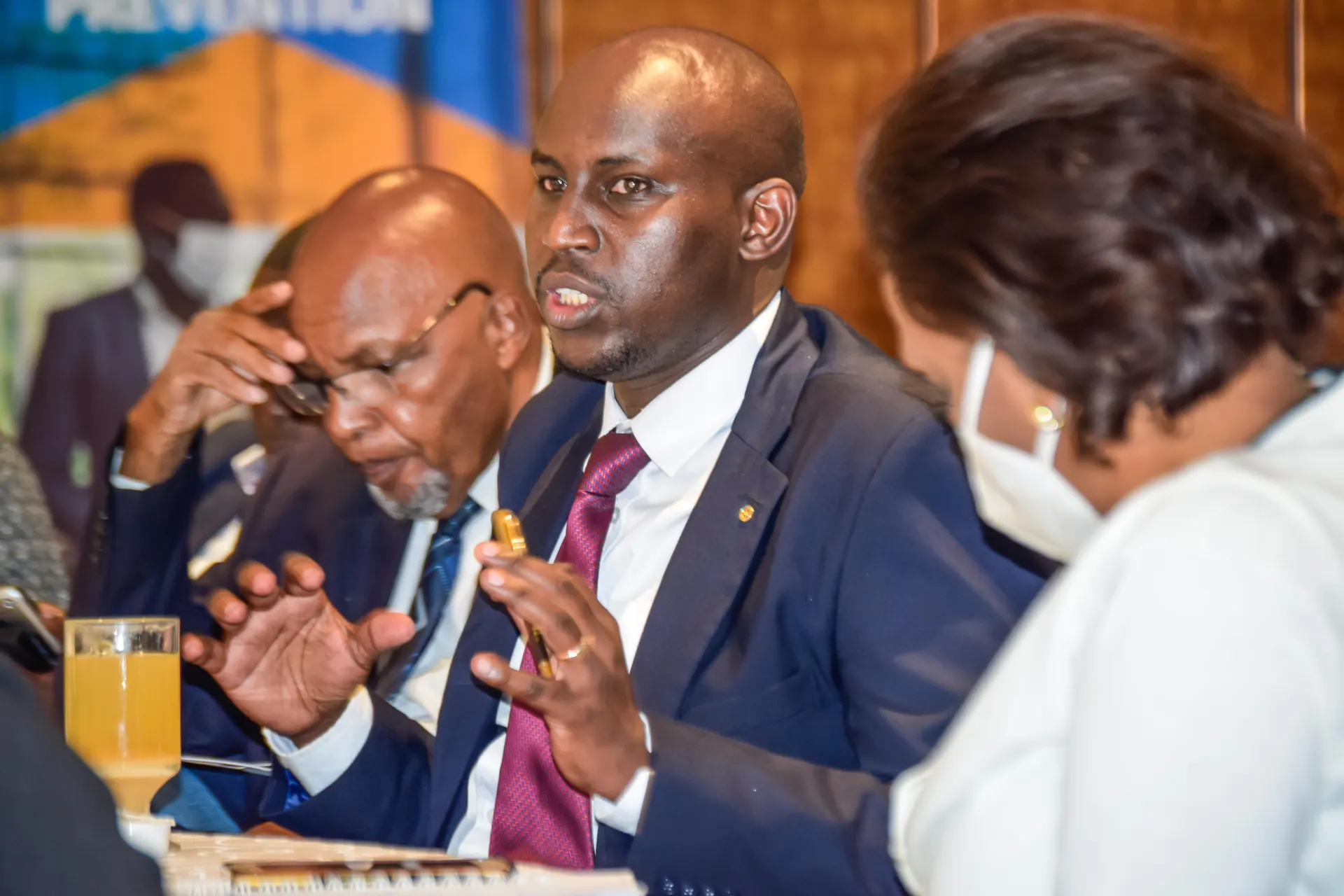
Chartered in 2014, we are professionals from across Eldoret and Uasin Gishu who meet every Thursday to plan and deliver service to our community.
Our club
Service in Eldoret since 2014
We are one of more than 46,000 Rotary clubs worldwide, and part of Rotary District 9215. Our members are business owners, doctors, teachers, farmers and public servants who share one idea: that a community's problems are best solved by the people who live in it.
Our work has concentrated on water, sanitation and the environment — adopting a kilometre of River Sosiani, bringing clean water and latrines to schools in Kapseret, and planting trees alongside our Rotaract and Interact clubs — while also supporting education, agribusiness training and children living with disability.
Club life
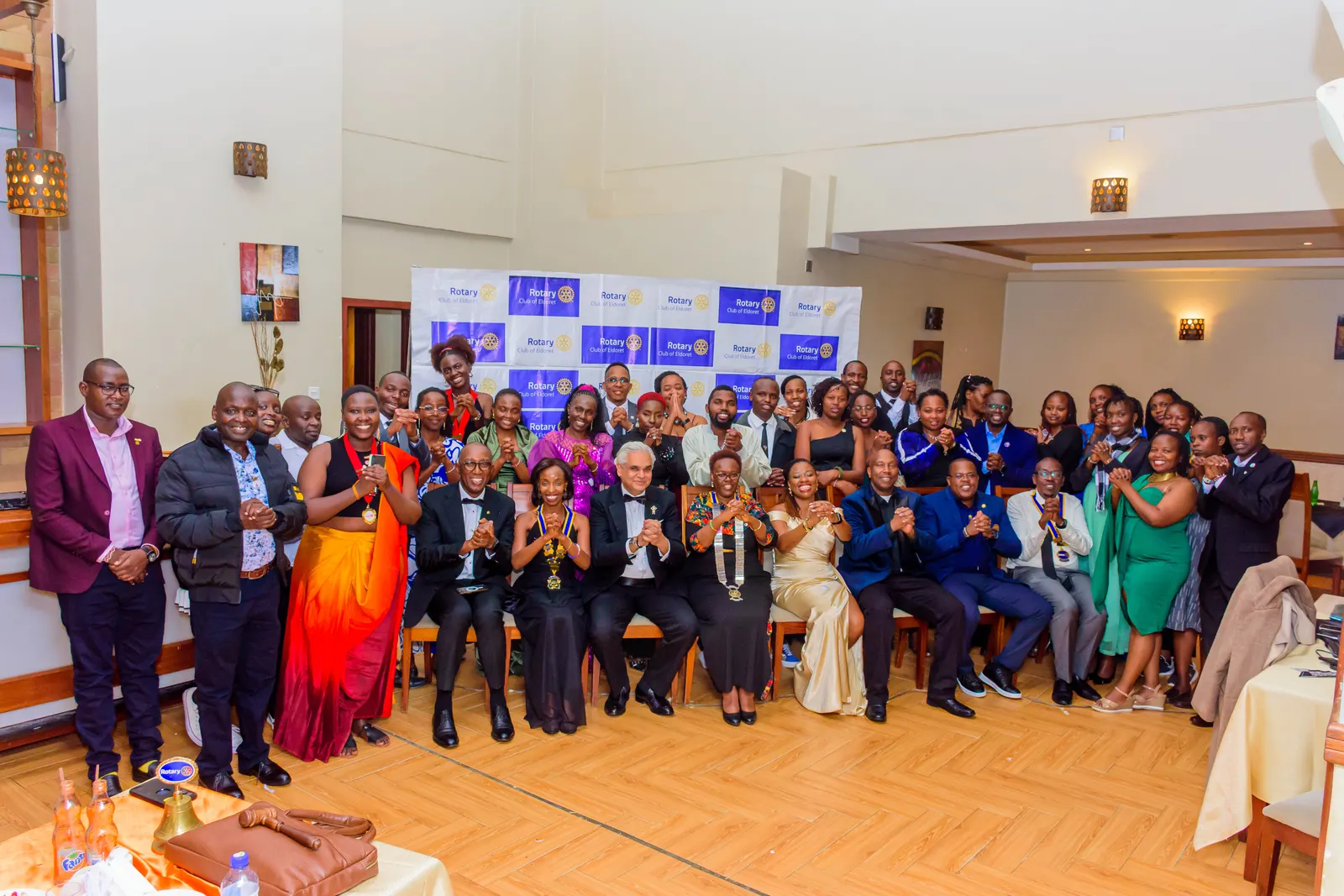
Fellowship and service, every week
Rotary is as much about the people you serve alongside as the work itself. These are our members at meetings, inductions and gatherings across Uasin Gishu.
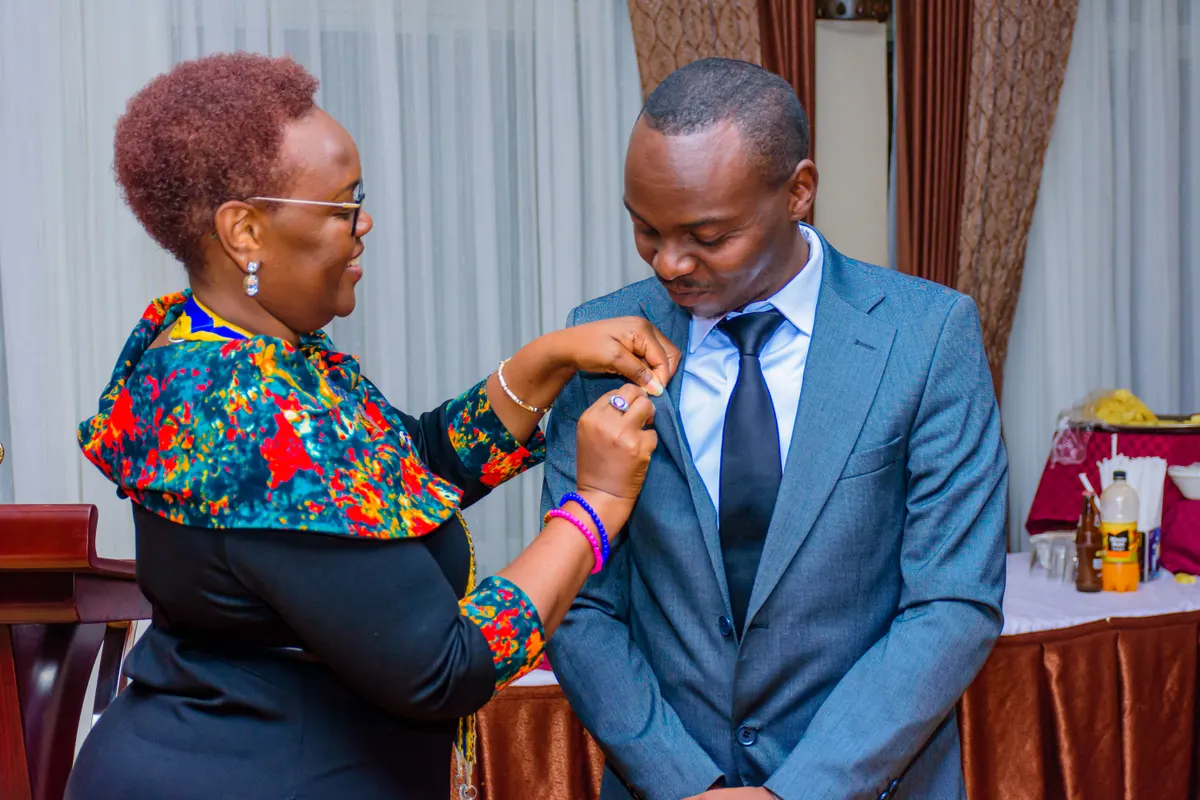
Welcoming a new member
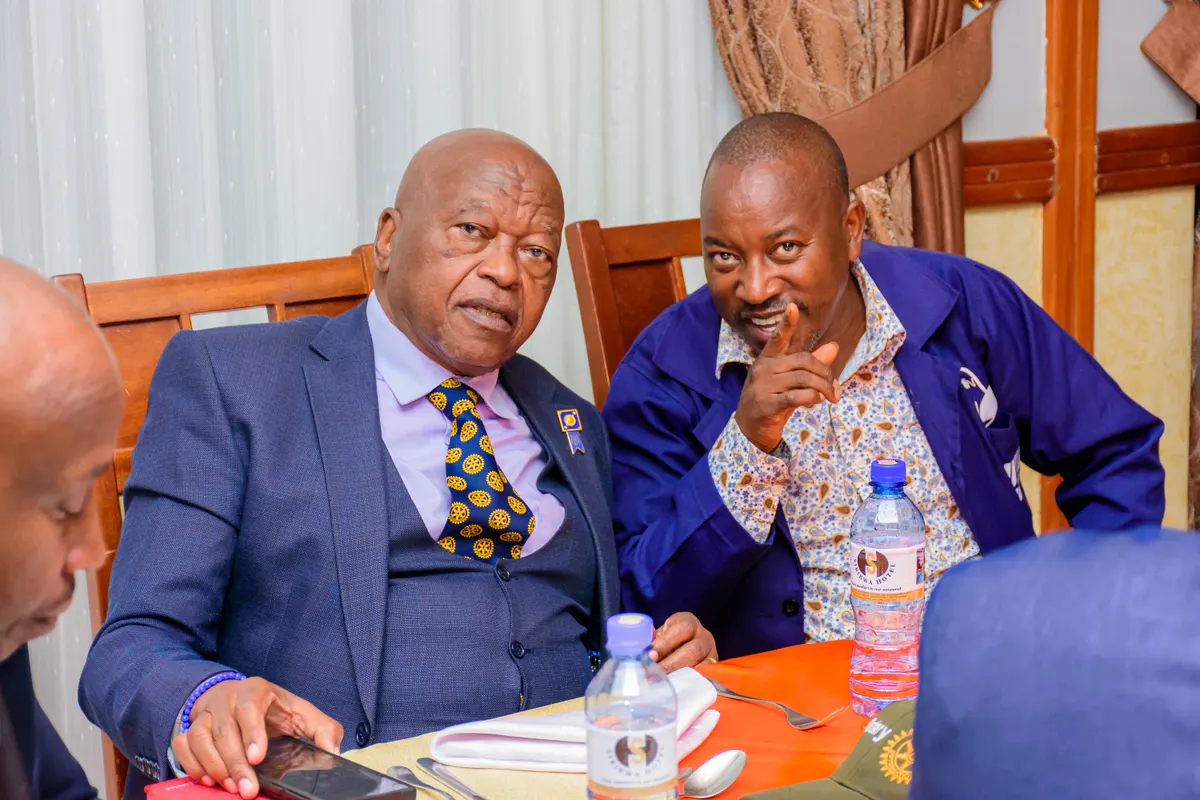
Around the table
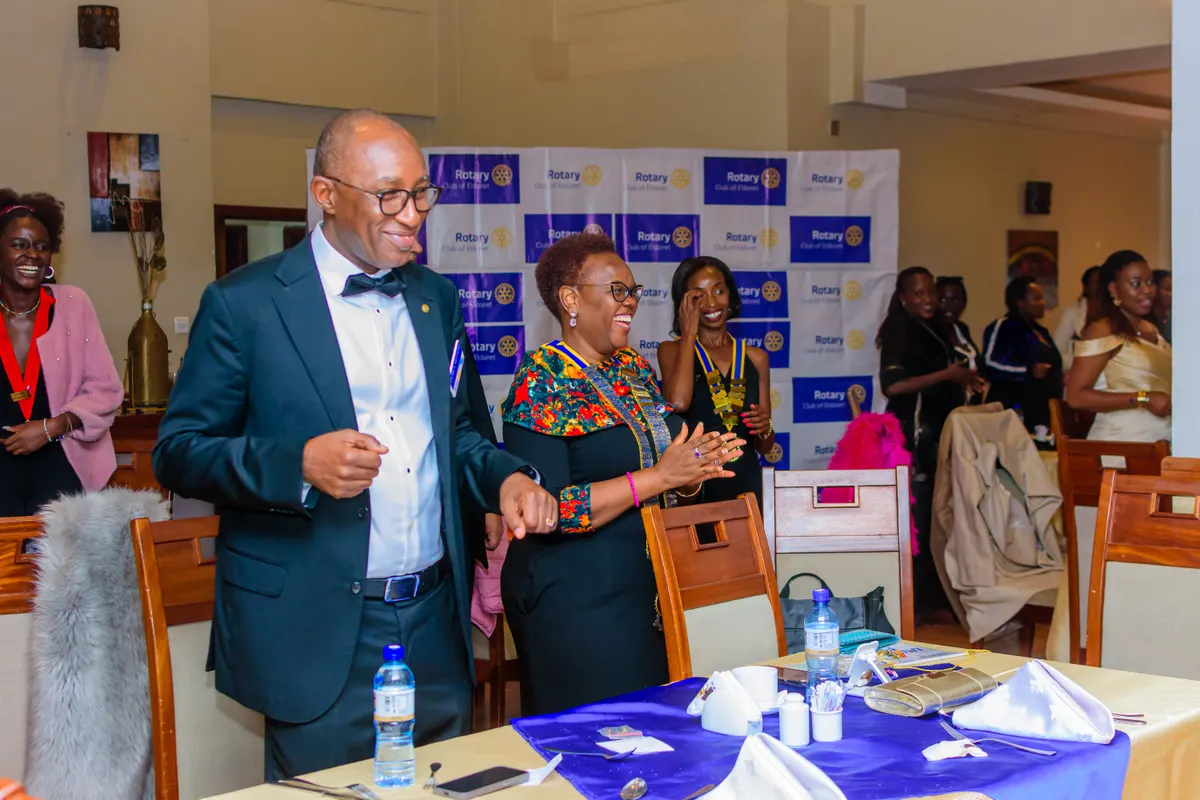
A weekly meeting
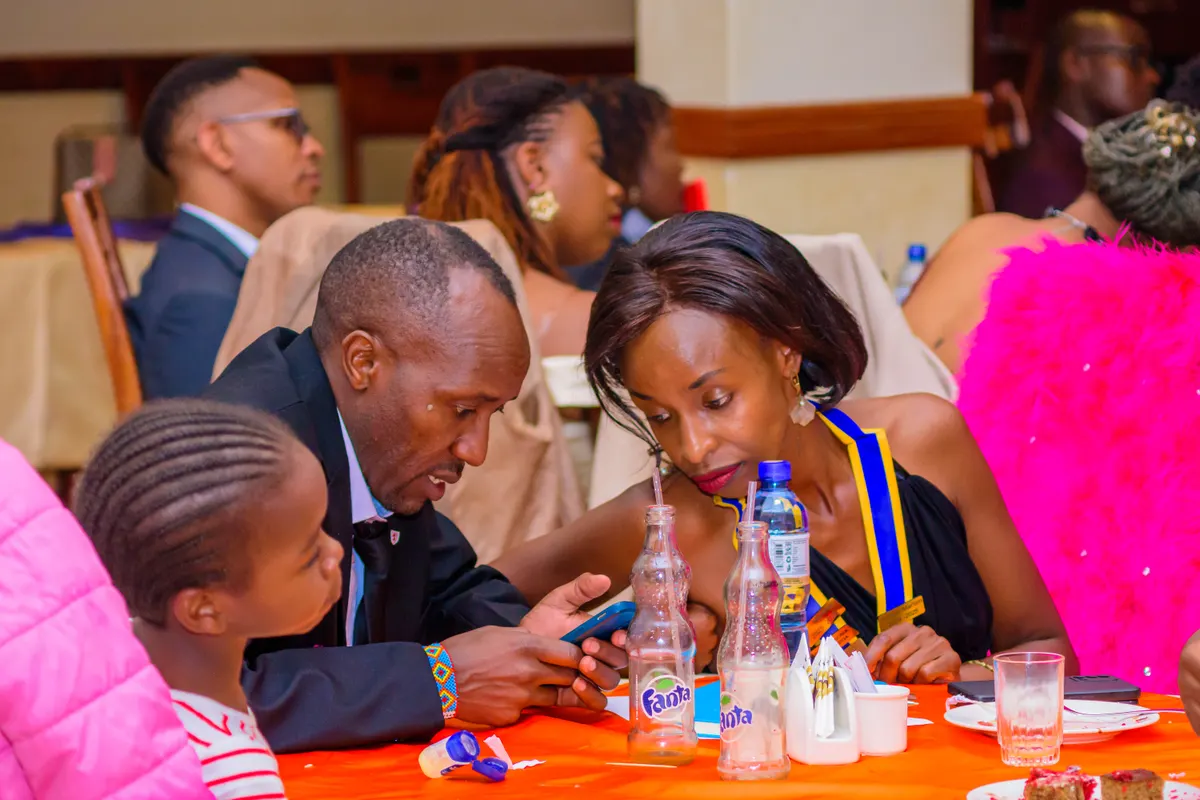
Fellowship
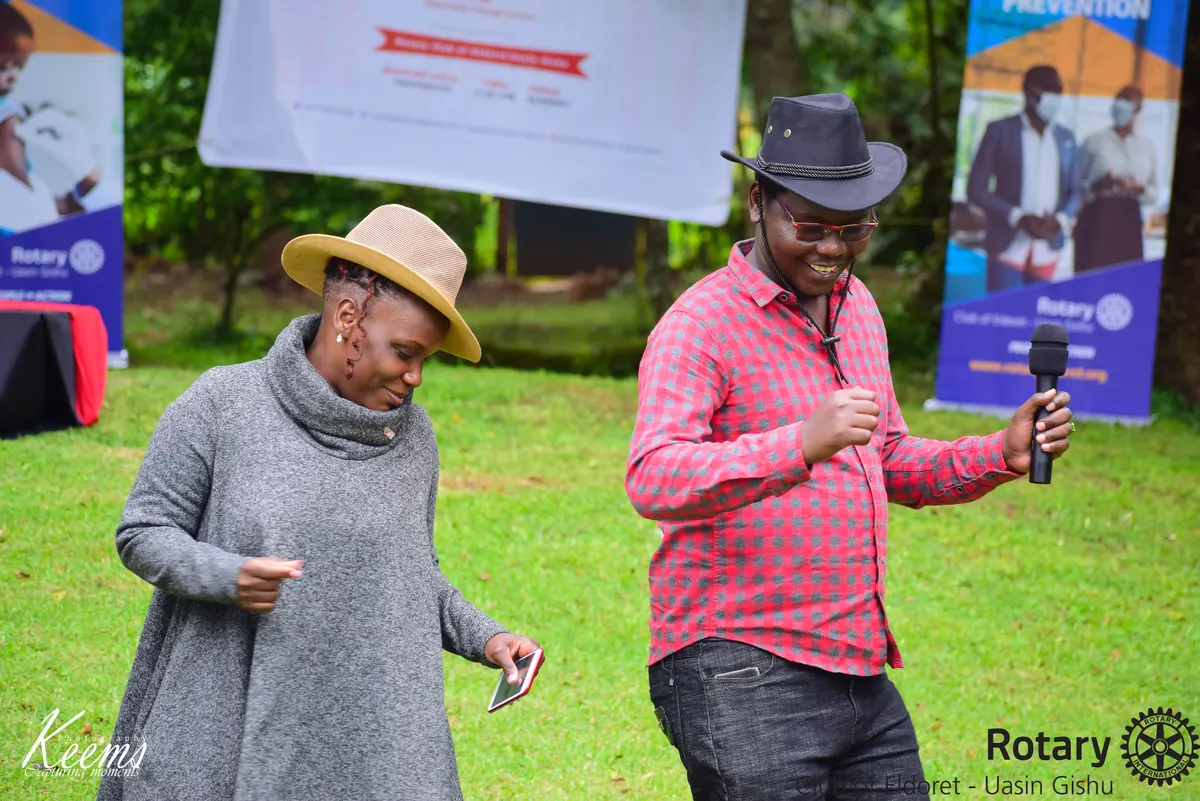
Beyond the meeting room
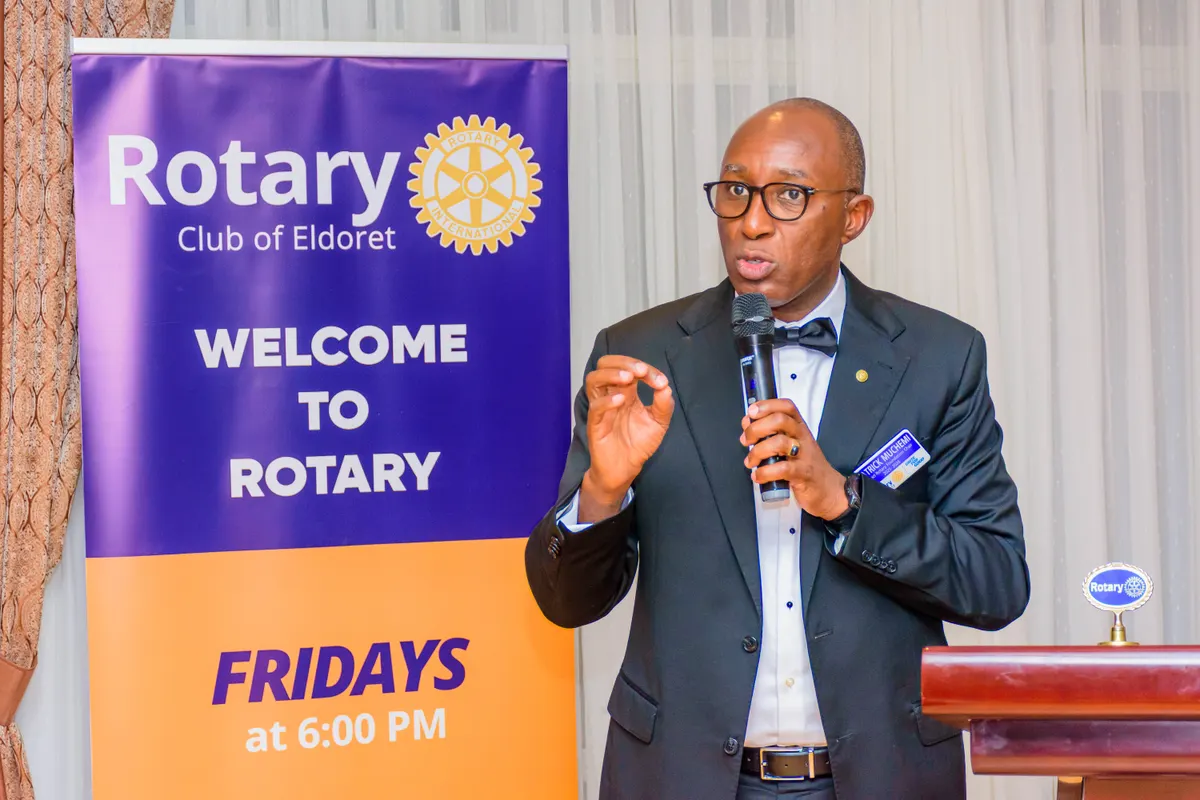
Guest speakers each week
Where Rotary began
One man’s idea, 1905
Rotary started with the vision of one man — Paul Harris. The Chicago attorney formed the Rotary Club of Chicago on 23 February 1905, so professionals with diverse backgrounds could exchange ideas and form meaningful, lifelong friendships.
The name ROTARY came from the group's early custom of rotating meeting locations among the offices of its members.
How we decide
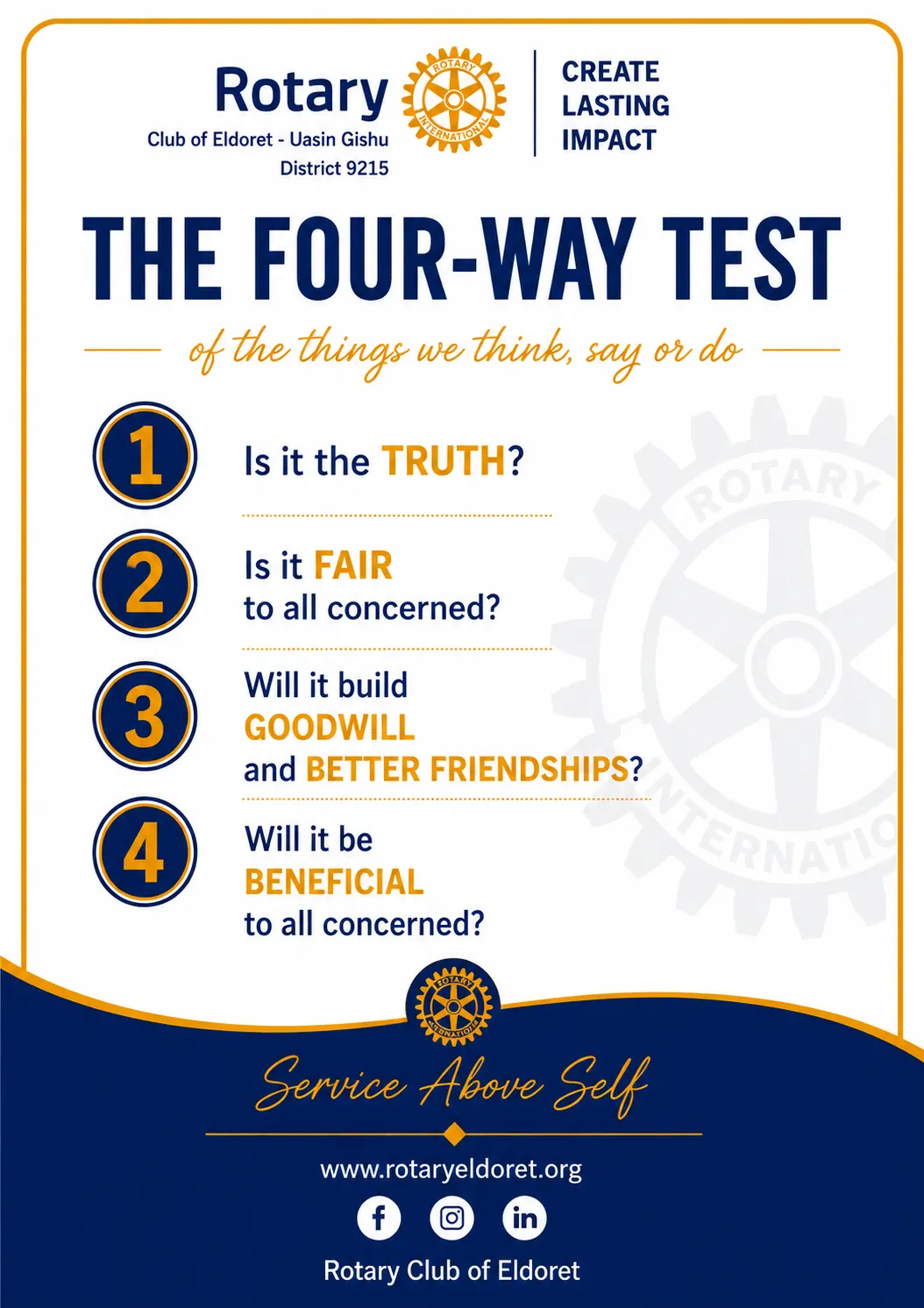
The Four-Way Test
The Four-Way Test is a nonpartisan and nonsectarian ethical guide for Rotarians to use for their personal and professional relationships. The test has been translated into more than 100 languages, and all Rotarians, worldwide, recite it at club meetings:
- 1Is it the TRUTH?
- 2Is it FAIR to all concerned?
- 3Will it build GOODWILL and BETTER FRIENDSHIPS?
- 4Will it be BENEFICIAL to all concerned?
What we are for
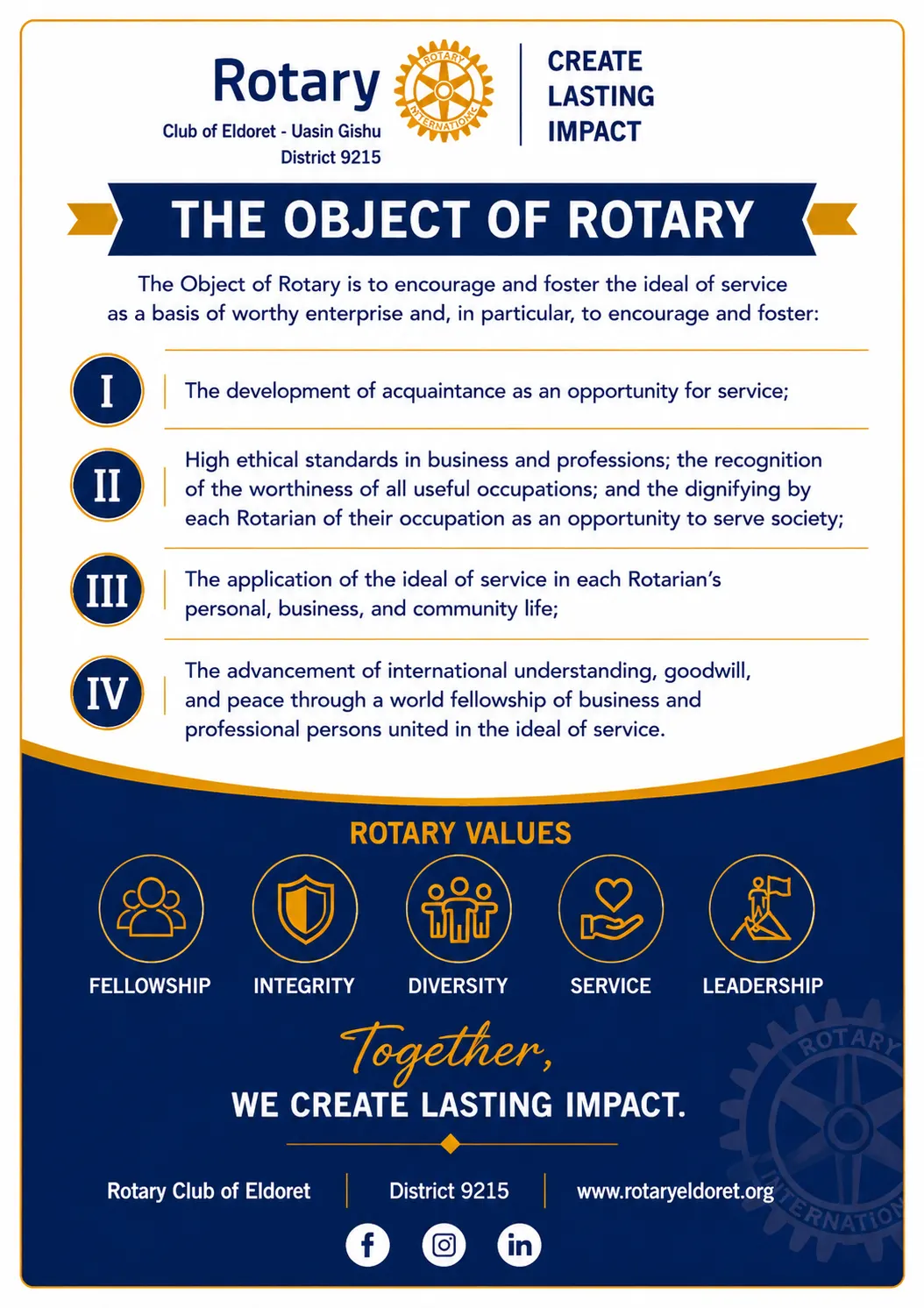
The Object of Rotary
The Object of Rotary is to encourage and foster the ideal of service as a basis of worthy enterprise and, in particular, to encourage and foster:
- IThe development of acquaintance as an opportunity for service;
- IIHigh ethical standards in business and professions; the recognition of the worthiness of all useful occupations; and the dignifying by each Rotarian of their occupation as an opportunity to serve society;
- IIIThe application of the ideal of service in each Rotarian's personal, business, and community life;
- IVThe advancement of international understanding, goodwill, and peace through a world fellowship of business and professional persons united in the ideal of service.
Rotary values
Fellowship
The friendships that form when people work side by side, year after year.
Integrity
We hold ourselves to high ethical standards, and test what we do against the Four-Way Test.
Diversity
A club is stronger when it draws on many professions, backgrounds and perspectives.
Service
We put our skills and time to work on the problems our community actually has.
Leadership
Rotary develops leaders — in the club, in business and in the community.
Together, we create lasting impact.
Where we focus
Rotary's areas of focus
The work of Rotary begins in the community, and every community has its own unique needs and concerns. While we serve in countless ways, we've focused our efforts in key areas to maximize our impact.





The Rotary Foundation
How our projects are funded
The Rotary Foundation is the philanthropic arm of Rotary (a 501c3 charitable corporation) that supports the efforts to advance world understanding, goodwill, and peace through the improvement of health, the support of education, and the alleviation of poverty.
The Rotary Foundation is supported solely by voluntary contributions from Rotarians and friends of the Foundation who share its vision. Each Rotarian is asked to contribute at least $25 per year to the Annual Fund.
District Grants
District grants fund small-scale, short-term activities that address needs in your community and communities abroad. Each district chooses which activities it will fund with these grants. Options range from humanitarian projects (including service travel and disaster recovery efforts), to scholarships (for any level, length of time, location, or area of study) and youth programs (including Rotary Youth Exchange, RYLA, Rotaract, and Interact).
Global Grants
Global grants support large international activities with sustainable, measurable outcomes in Rotary's areas of focus. There are three types of global grants: humanitarian projects, scholarships for graduate-level academic studies, and Vocational Training Teams, which are groups of professionals who travel abroad either to teach local professionals about their field or to learn more about it themselves.
Disaster Response Grants
Disaster response grants support relief and recovery efforts in areas that have been affected by natural disasters within the past six months. Funds can be used to provide basic items such as water, food, medicine, and clothing. Districts are responsible for identifying the needs in the communities affected and determining how funding could best meet their needs.